Running your business · Get paid properly, part 1 of 3
The deposit conversation: what to say so clients pay, and keep coming back
A deposit only protects you if you can ask for it without wincing. By the end of this guide you'll have an amount you can defend, a policy you can copy, the exact words for every stage, and a calm answer for the client who pushes back.
On this pageDeposit, cancellation fee, no-show fee
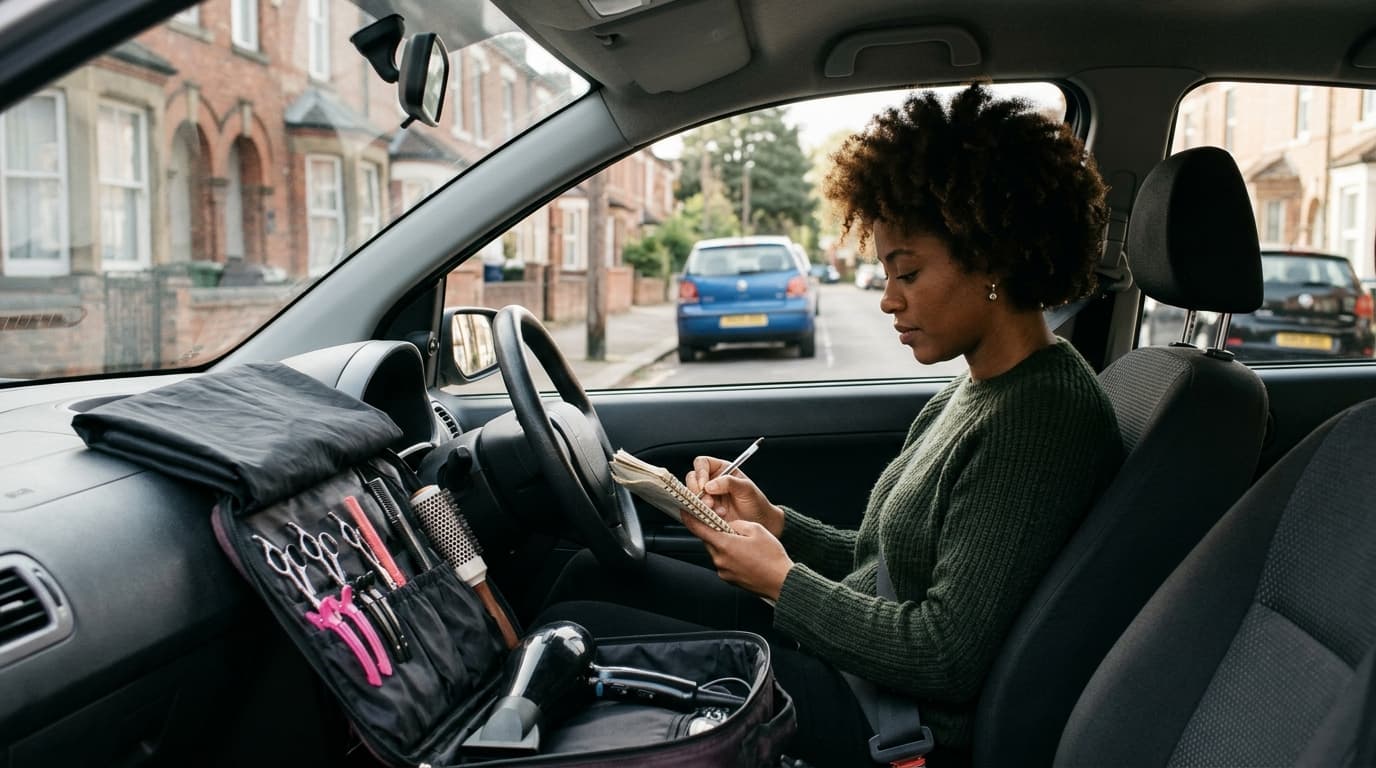
It's 9.40am. Your 10 o'clock is a full head of highlights. You've loaded the car, driven twenty minutes, and the door doesn't open. At 10.15 the text arrives: "So sorry, completely forgot!" The morning is gone, and so is the money.
Most stylists know a deposit would have saved that morning. What stops them is the conversation. This guide gives you the amount, the policy and the exact words, so asking for a deposit sounds like good service, not suspicion.
Deposit, cancellation fee, no-show fee: three different things
People use these words loosely, but they work very differently.
- Deposit. Paid when the client books, to reserve the slot. It usually comes off the bill on the day.
- Cancellation fee. Charged when a client cancels with less notice than your policy asks for.
- No-show fee. Charged when a client doesn't turn up at all.
Only the deposit is money you already hold. A fee you have to chase after a no-show is money you'll often never see, and chasing it can cost you the client and a review. That's why a deposit taken at booking does most of the work, and the policy simply says when you keep it.
What UK law expects (in plain English)
You don't need a solicitor to take a deposit, but your policy does have to be fair. Under the Consumer Rights Act 2015, a term in a consumer contract that's unfair isn't binding on the client, however clearly it's written down.
The Competition and Markets Authority (CMA) has published a short guide on deposits. The main points for a hairdresser:
- A deposit reserves the service, and is more likely to be fair when it's a small percentage of the total price.
- What you keep should reflect what you actually lose. If a client gives you enough notice to rebook the slot, keeping the whole deposit is harder to justify.
- "No refunds in any circumstances" is likely to be unfair. Your policy should say when the client gets their money back, including when you cancel.
- Larger upfront payments (for example, product you've bought specially for a colour correction) should reflect your real costs.
This is general information about UK consumer law as at October 2026, not legal advice for your business. If you're unsure, your local Trading Standards service or the Business Companion website (run with Trading Standards) is a good free starting point.
The 14-day cooling-off rule most stylists don't know about
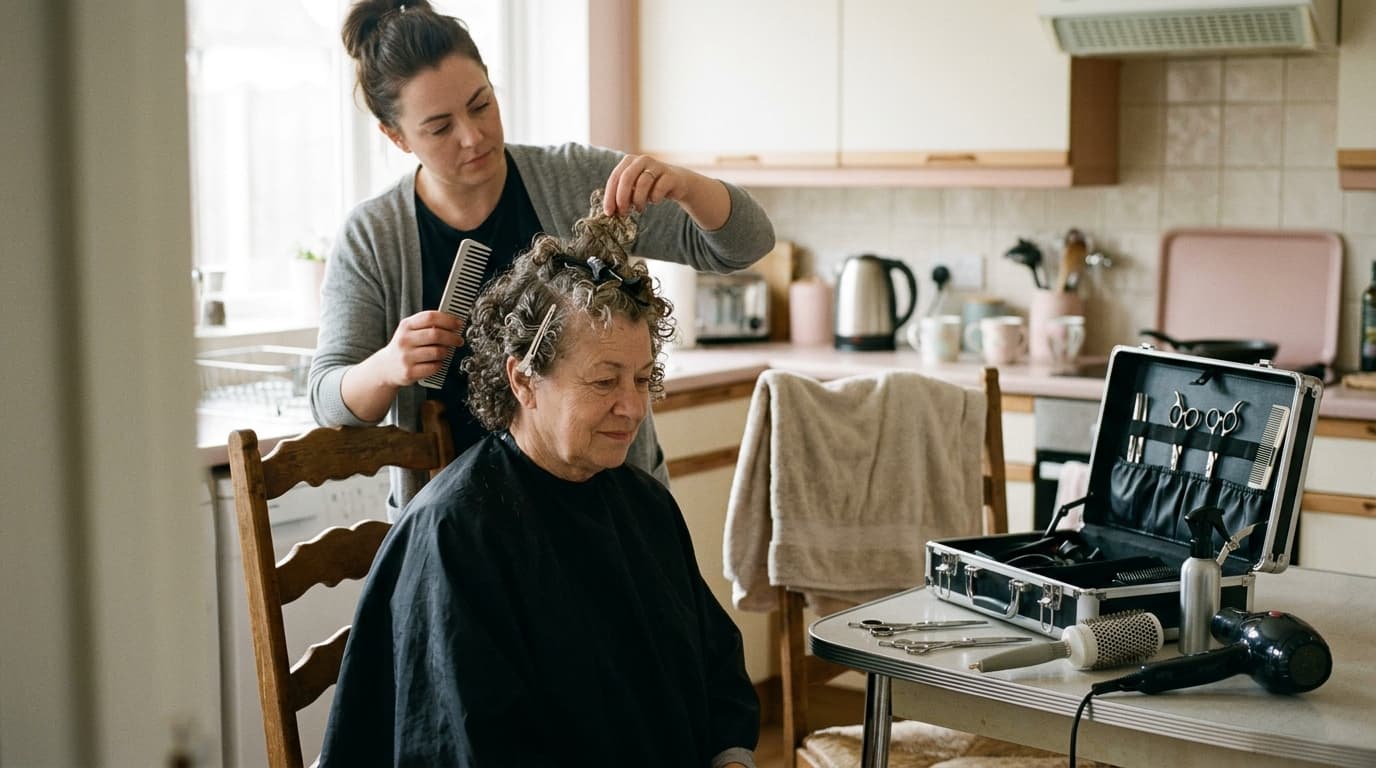
If a client books by phone, text, DM or online, the booking is a "distance contract" under the Consumer Contracts Regulations 2013. If it's agreed face to face somewhere other than your business premises, it's an "off-premises contract", and similar rules apply. For a mobile stylist, that can include booking the next appointment while you're standing in the client's kitchen.
Citizens Advice's guidance to consumers is clear about what this means: they get a 14-day cooling-off period, starting the day after they book, and if they paid a deposit and cancel within it, they're entitled to all of it back.
There's an exception for "leisure activities for specific dates". The examples Citizens Advice gives are hotel and restaurant bookings, theatre tickets and wedding catering. Hairdressing isn't on that list, and we couldn't find any official guidance saying it's covered. So the cautious approach is to assume the 14 days apply to you.
In practice:
- Booked more than 14 days ahead? The cooling-off period has ended before the appointment, so your normal notice policy applies.
- Booked within the last 14 days and cancelled before the appointment? Plan to refund the deposit in full, or offer to move it if the client would prefer that.
- A no-show who never gets in touch. The cooling-off right is a right to cancel by telling you. In our reading, a client who simply doesn't turn up hasn't used it, so your policy (and the fairness rules above) still applies. If it ever turns into a dispute, that's the point to take proper advice.
- Tell clients about the 14 days when they book. The regulations expect you to. If you don't, the cooling-off period can be extended by up to 12 months, and the client may owe you nothing for work done during it.
- Get a written "yes" for appointments inside the 14 days. You shouldn't start a service during the cooling-off period unless the client has asked you to. A line in your confirmation such as "Your appointment is within 14 days of booking: just reply YES to confirm you're happy for me to go ahead" covers it.
None of this stops you taking deposits. It mostly matters for short-notice bookings, and the habits that protect you are the same ones that make clients trust you: a modest deposit, a policy in writing before they pay, and an easy way to move the date.
Setting an amount you can defend
The fairest deposit is one you could explain to a stranger. Start with what a lost appointment actually costs you.
Worked example (illustration only): a full head of highlights at £120, booked for a three-hour slot including travel.
- With a week's notice, you'll very likely refill the slot. Your loss is close to nothing.
- With 24 hours' notice, you might fill half of it. Your loss is roughly half the slot.
- With no notice, you lose the whole slot, plus fuel, plus the time you spent getting ready.
A deposit of £30 here doesn't cover the worst case, and it doesn't need to. It's big enough that clients take the booking seriously, and small enough that it obviously reserves rather than punishes.
| Service | Price | Example deposit | What it covers |
|---|---|---|---|
| Cut & finish | £45 | £10 | A short slot that's fairly easy to refill |
| Full head highlights | £120 | £30 | Half a morning blocked out |
| Colour correction | £220 | £60 | A long slot, often with product bought in |
| Bridal trial | £80 | £40 | Prep time and a date that's hard to refill |
Some stylists only take deposits from new clients and for long or high-cost services. That's fine, as long as you decide the rule in advance and apply it consistently. "It depends who you are" is what makes clients feel judged.
A policy you can copy
Keep it short enough to read on a phone. Fill in the brackets and send it with every booking confirmation.
To secure your appointment I take a deposit of £[amount], which comes off your bill on the day. If you need to cancel or move your appointment, please give me at least [48] hours' notice and I'll move your deposit to a new date or refund it. If you cancel with less notice than that, or don't attend, I'll keep the deposit to cover the time I set aside for you. If I ever have to cancel, you'll get your deposit back in full, straight away. If you booked by phone, message or online, you also have the right to cancel within 14 days of booking and get your deposit back in full.
Notice what it does: it explains why (the time set aside), offers a way out (notice), and promises fairness both ways (you refund if you cancel). That line does more for trust than anything else. The last sentence covers the 14-day cooling-off rule, so you're not caught out by it.
The exact words, at every stage
Lovely, I've got you down for Thursday at 10. To hold the slot I take a £30 deposit, which comes off the price on the day. If anything changes, just let me know 48 hours before and I'll happily move it for you.
Just to let you know, from next month I'm asking everyone for a small deposit when they book. It's nothing to do with you at all. A few late cancellations were costing me whole mornings, and this means I can keep my prices where they are.
Thanks for letting me know, and I hope everything's OK. As it's less than 48 hours' notice I'll keep the deposit this time, as the slot's been set aside for you. Would you like me to find you a new date?
Hi [name], I was at yours at 10 today but couldn't get an answer, so I hope all's well. As per my booking policy the deposit covers the missed slot. If you'd like to rebook, just let me know a couple of dates that suit.
Always end with an offer to rebook. The aim is to keep the client and protect your time, not to win the argument.
When a client pushes back
Most pushback comes in one of three forms. Have your answer ready so you don't negotiate on the spot.
- "I've never missed an appointment!" "I know, and I really appreciate that. It's the same for everyone, so it's fair across the board, and it comes straight off your bill."
- "My last hairdresser didn't do this." "That's fair enough. I travel to every client, so a missed slot costs me the journey as well as the time. This lets me keep my prices down."
- "Something came up, can I have it back?" Follow your policy, then use your discretion for genuine emergencies, such as illness or a bereavement. Decide in advance what counts, so you're consistent.
Do
- Frame it as holding their slot
- Send the policy in writing before they pay
- Offer to move the deposit when they give notice
- Waive it deliberately, now and then, for a loyal client
Don’t
- Apologise for having a policy
- Mention other clients who let you down
- Change the amount mid-conversation
- Keep it when you had to cancel
Having a policy that lives only in your head. If the client never saw it before paying, it's hard to rely on it, and it's the first thing they'll say when you keep a deposit. Put it in every booking confirmation.
If you’ve been doing this a while…
Using deposits as a business tool
Once deposits are routine, they can do more than stop no-shows.
- Shape your diary. A higher deposit on your hardest-to-get slots (Saturday mornings, December) gently nudges flexible clients towards quieter days, without changing your prices.
- Prefer moving to refunding. When a client gives notice, offering to move the deposit to a new date keeps both the money and the booking. Most clients are happy to take it.
- Use your own numbers. Count late cancellations and no-shows for three months before and after you start. If they barely move, your deposit may be too small to matter. If bookings drop, it may be too big or worded too sharply.
- Allow for card fees. If you take deposits by card, the processing fee comes out of each one, so very small deposits lose a bigger share. Factor it into your minimum.
- Chair renters, check your agreement. If you rent a chair, find out whether the salon's cancellation policy or your own applies to your clients, and whose account the deposit goes into. Sort it out in writing before there's a dispute.
- Mobile stylists, name the journey. If a client cancels while you're already on the road, say so in your policy. "Less than [X] hours' notice" covers it, and clients understand travel time better than you might expect.
Next in this series: Pricing in travel: how mobile stylists stop working for free between clients.
Sources
- Consumer Rights Act 2015, Part 2: Unfair terms. legislation.gov.uk
- Competition and Markets Authority, Deposits and advance payments (short guide, UCT 04). GOV.UK
- Competition and Markets Authority, Wedding venues advised to play fair (press release on deposits and cancellation charges). GOV.UK
- The Consumer Contracts (Information, Cancellation and Additional Charges) Regulations 2013, Part 3 (right to cancel), including regulations 28 (exceptions), 31 (extended period if not informed) and 36 (services during the cancellation period). legislation.gov.uk
- Citizens Advice, Cancelling a service you've arranged. citizensadvice.org.uk
- Business Companion (Trading Standards), Consumer contracts: distance sales. businesscompanion.info
A fill-in-the-blanks policy and four ready-made messages.
Jump to the wording